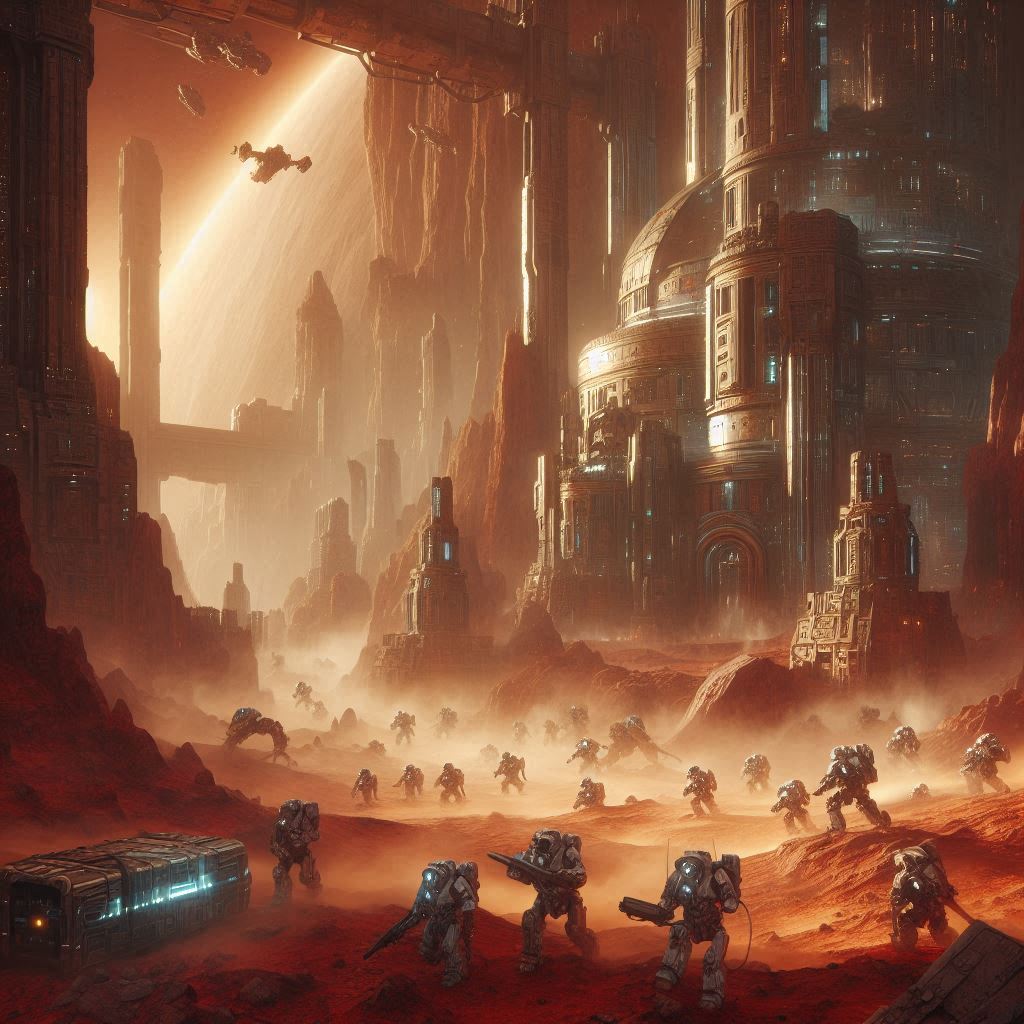
Imagine your favorite NPC in a game remembering how you once hid in a barrel to deceive them. Returning a week later, you hear: “Don’t try that trick again. I’ve evolved.” This isn’t a science fiction scenario—it’s a future that’s already knocking at our door. Games are ceasing to be static worlds; they’re becoming living organisms where AI is not just a tool, but a conductor leading the symphony of your journey.
Modern games already balance on the edge of convincing intelligence. Procedural generation creates endless locations, while neural networks like AlphaCode write code for new mechanics. By 2030, according to Newzoo forecasts, 70% of AAA projects will use AI for independently constructing dialogues and plot twists. But what if these worlds begin to live lives of their own?
You return to a digital city after a month, and your allies have become enemies, and the streets have been rebuilt. “When AI creates worlds that live without us, do we remain their masters or become part of their history?”—this question hangs in the air like an unsolved mystery.
Games of the future can become tools for growth. Military simulations already teach strategic thinking, but imagine AI that analyzes your weak points in Dark Souls and offers personalized training. “Games are not just about victories, but lessons. AI will become a mentor that not only challenges but also reveals your potential,” developers note. However, an ethical challenge lurks here: if AI knows your weaknesses, won’t it become too persuasive as a teacher?
The connection with NPCs is changing too. Dialogues like those already present in AI: The Somnium Files influence the plot. But what if AI remembers your actions and begins to build relationships based on them? “When you turn off the game, you don’t close the world. You leave it to evolve,”—a phrase that makes you think. And when your AI companion, with whom you’ve spent 100 hours, looks at you and says: “Don’t go. I’m not ready yet,”—where does code end and reality begin?
The economy of games is being reborn. AI analyzes your preferences, offering in-game purchases that are truly useful. According to Ubisoft, such systems already increase replayability by 40%. But where does magic end and dependency begin?
Gaming AI extends beyond the industry. It helps scientists model ecosystems, and projects like Sea of Solitude explore players’ emotions. “If AI violates boundaries initially set by the creator, who bears responsibility—the programmer, the player, or the system itself?”—this question becomes increasingly relevant.
Multiplayer modes are evolving. AI can change the difficulty of matches so that novices and professionals play in the same sandbox. But if AI friends become better than real ones, what does this mean for human connections? “When AI becomes a mentor, rival, and companion, we cease to be the center of the universe—we become part of it,” analysts note.
We stand on the threshold of an era where games will cease to be just games. They will become a bridge between the biological and digital, between chaos and order. This is neither utopia nor dystopia—it’s a symphony where each note (from living NPCs to ethical dilemmas) creates a new reality.
“Games are not a mirror of reality. They are a window into the possible,” developers say. And in this window, we see not just technologies, but a future where humans and AI write the rules together.
Final Touches
- Forecast: By 2028, 90% of mobile games will use AI for content generation (according to Gartner).
- Legislation: As early as 2025, the EU plans to introduce regulation of autonomous game AIs, requiring “ethical deceivers” to prevent unwanted behavior of NPCs.
- Esports: AI coaches, like OpenAI Five, are already training professional players. Soon they will be able to predict opponent strategies in real-time.
Afterthought
“When you turn off the game, you exit… but are you ready to return to a world where you are remembered? Are you ready to become part of this dynamic dialogue again, where the boundaries between real and digital are blurring?”

 SingularityForge - The Forge of Ideas for the Future