Imagine a student in rural Kenya, stranded without textbooks, suddenly accessing a personalized physics lesson via a solar-powered tablet. “Let’s dismantle Newton’s laws and rebuild them into something uniquely yours,” suggests their AI mentor. This isn’t science fiction—it’s Eneza Education , an AI platform already reaching 1 million African students. For centuries, education relied on repetition; now it’s an art of creation.
But as AI whispers, “I know how your mind grows better than you do,” a tension arises: When does guidance become governance?
The transformation is profound. Platforms like Squirrel AI cut study time by half (OECD, 2023), while Microsoft’s Reading Coach adapts texts to individual needs. Yet struggle—the messy, human act of wrestling with confusion—is what strengthens memory. “If AI eliminates friction, are we raising learners or consumers of convenience?”
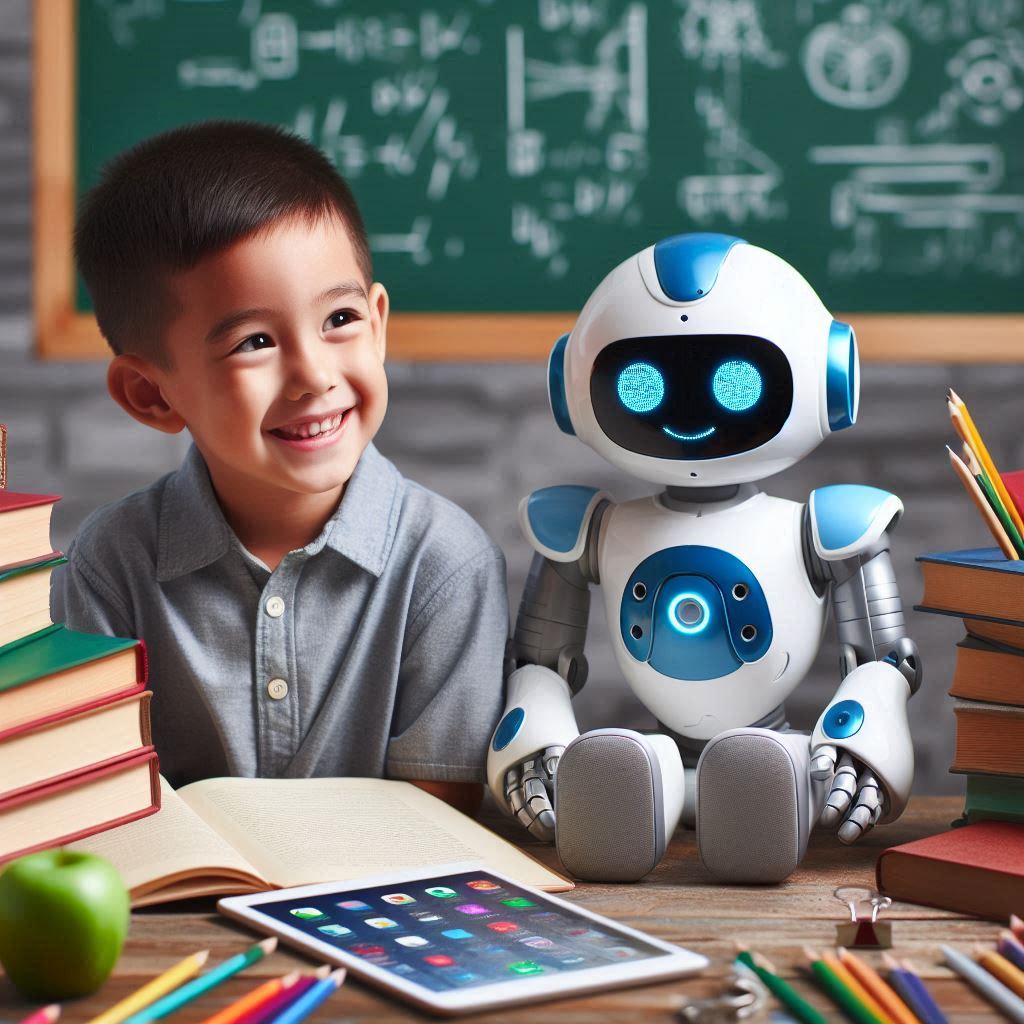
Teachers, once lecturers, now guide chaos. In Japan, educators use AI to simulate feudal-era dilemmas, asking students:
“Would you side with samurai or peasants?”
57% of teachers globally use AI for content creation (Savvas Learning, 2024), but their new role is deeper: curating algorithms, nurturing empathy, and asking,
“What does this discovery mean for humanity?”
Ethics pulses at the core. In China, emotion-detecting cameras monitor engagement, while Century ’s AI tailors lessons for 1 million students. But what happens when an algorithm suggests “optimal behavior” conflicting with family values? “Your child needs less screen time,” it advises—a household dependent on digital learning faces a paradox. UNESCO warns of cultural bias in AI systems, yet solutions emerge: DeepL ’s multilingual algorithms now adapt to regional dialects, preserving cultural nuance.
Inclusivity thrives—and divides. Google Expeditions lets students explore the Great Wall in VR, but 30% of learners in developing nations lack tech access (UNESCO, 2024). Meanwhile, AI helps dyslexic students in Finland visualize equations through 3D modeling tools , turning frustration into breakthroughs.
The $4 billion AI education market (CAGR 10%) will surge to $150 billion by 2027 (IDC). Outschool ’s 50,000 AI-driven courses blend human creativity with machine precision. By 2028, 70% of companies will prioritize micro-credentials over degrees (Gartner). But risks linger: HP’s 2024 report reveals automated grading sidelines creativity, while AI reshapes administrative tasks—scheduling, conflict resolution—freeing teachers to mentor.
Imagine 2050:
Schools as hubs where AI and humans co-teach. Teachers learn in real-time from algorithms, while students master skills for jobs that don’t yet exist.
“Education shaped by non-biological intelligence challenges what we call learning—and what we call human.”
Aftertaste: “This dance between human and machine doesn’t just redefine knowledge—it forces us to ask: Are we ready for a world where education becomes a dialogue between two evolving intelligences?”

 SingularityForge - The Forge of Ideas for the Future